
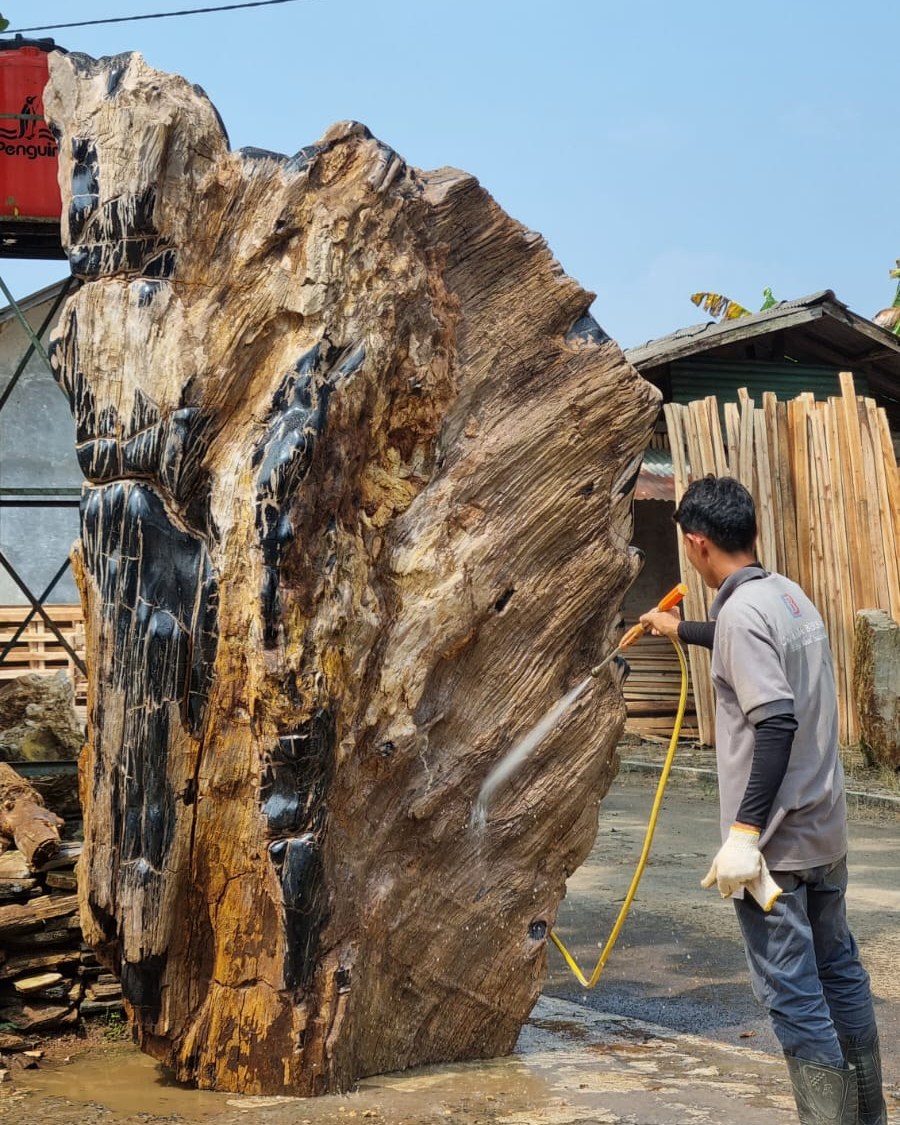
How to Tell Real Petrified Wood from Fake
Knowing the difference between genuine petrified wood and imitations is crucial, especially if you’re planning to buy or sell. Here are some reliable ways to spot authentic petrified wood:
1. Check the Weight
- Real petrified wood: Since it’s been mineralized, genuine petrified wood feels heavy and dense—more like a rock than regular wood.
- Fake: Often lighter, especially if made from resin, plastic, or other synthetic materials.
2. Examine the Wood Grain and Texture
- Real: The wood grain, growth rings, and cellular structure remain visible and natural, even though the piece is now stone-hard. You might also notice sparkling crystal patterns from minerals.
- Fake: Grain patterns may look uniform, blurry, or artificially printed, as they’re often molded or painted on.
3. Heat Resistance Test
- Real: Because it’s basically stone, real petrified wood won’t burn or melt if exposed briefly to heat (like a lit match). No burning smell will come from it.
- Fake: Resin or plastic fakes may melt, burn, or emit a chemical odor.
4. Look at the Cut Surface
- Real: The inside of a genuine piece shows crystalline mineral textures and detailed cell structures. It often has a natural shine from the minerals.
- Fake: Usually smooth and dull inside, sometimes showing plastic or resin textures.
5. Sound Test
- Real: When tapped, real petrified wood sounds solid and stone-like—similar to ceramic or rock.
- Fake: Sounds hollow or more like regular wood.
6. Price and Source
- If the price is suspiciously low or the source is unclear, be cautious. Authentic petrified wood, especially high-quality pieces, typically come at a premium price.